
When painting a court, the technique that quietly makes or breaks the finished look isn't the color itself, it's how you close out each pass. Left unmanaged, excess material at the end of a paint job shows up as buildup, puddles, or drag marks right where the eye naturally lands. That's exactly what the pull-off technique, using a plastic or poly sheet at your finishing point, is designed to prevent.

Here's how it works and how to execute it cleanly.
What Is the Pull-Off Technique?
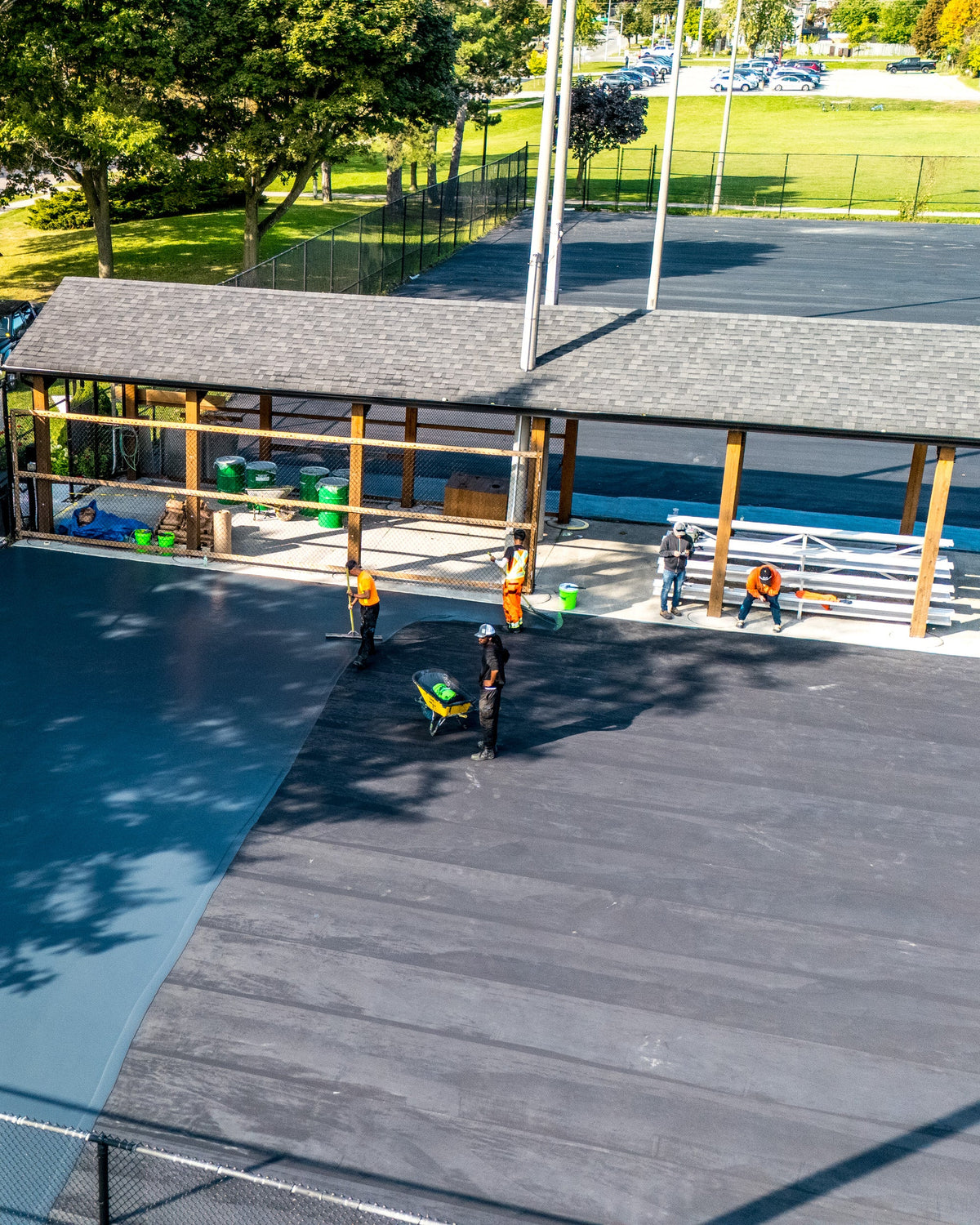
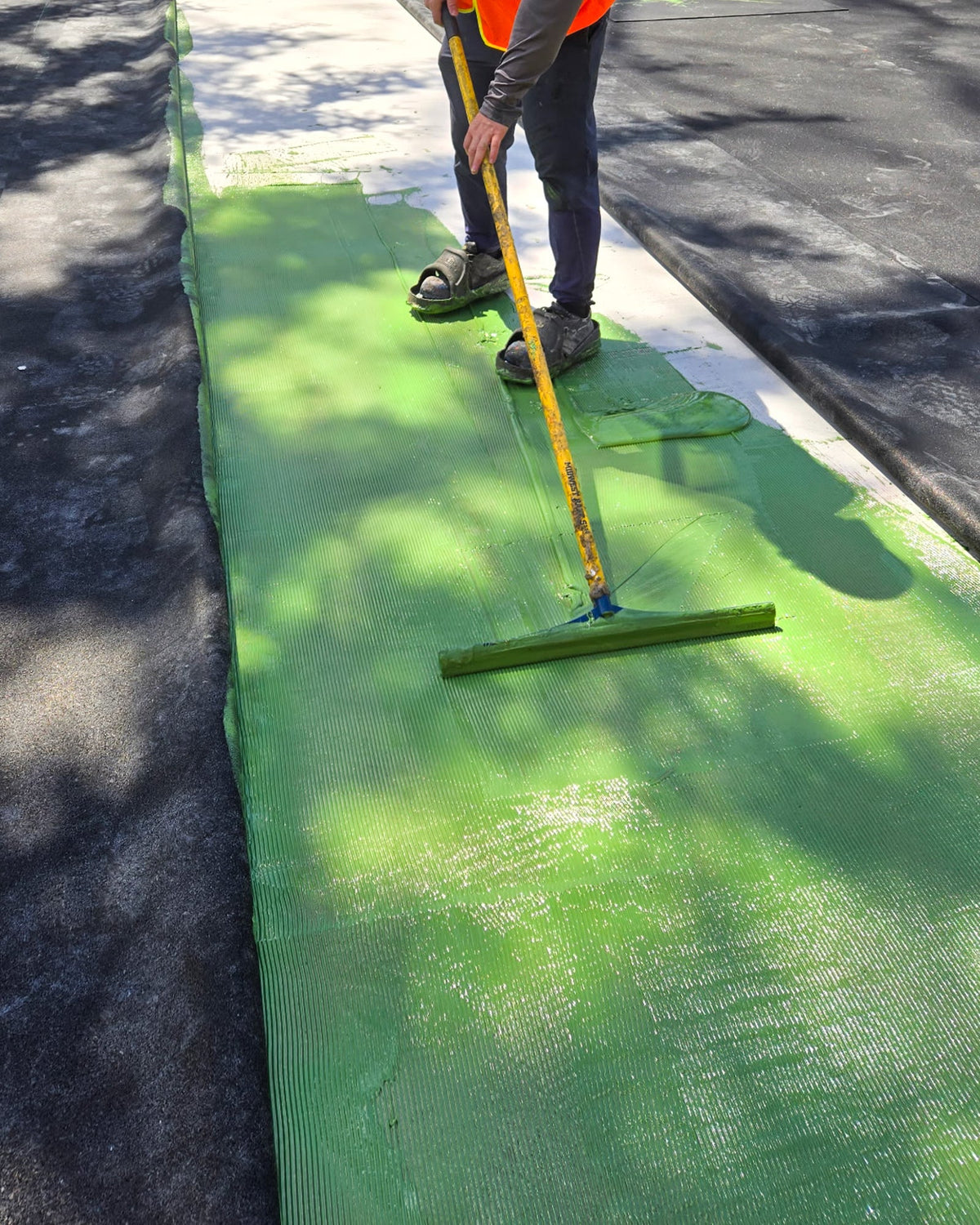
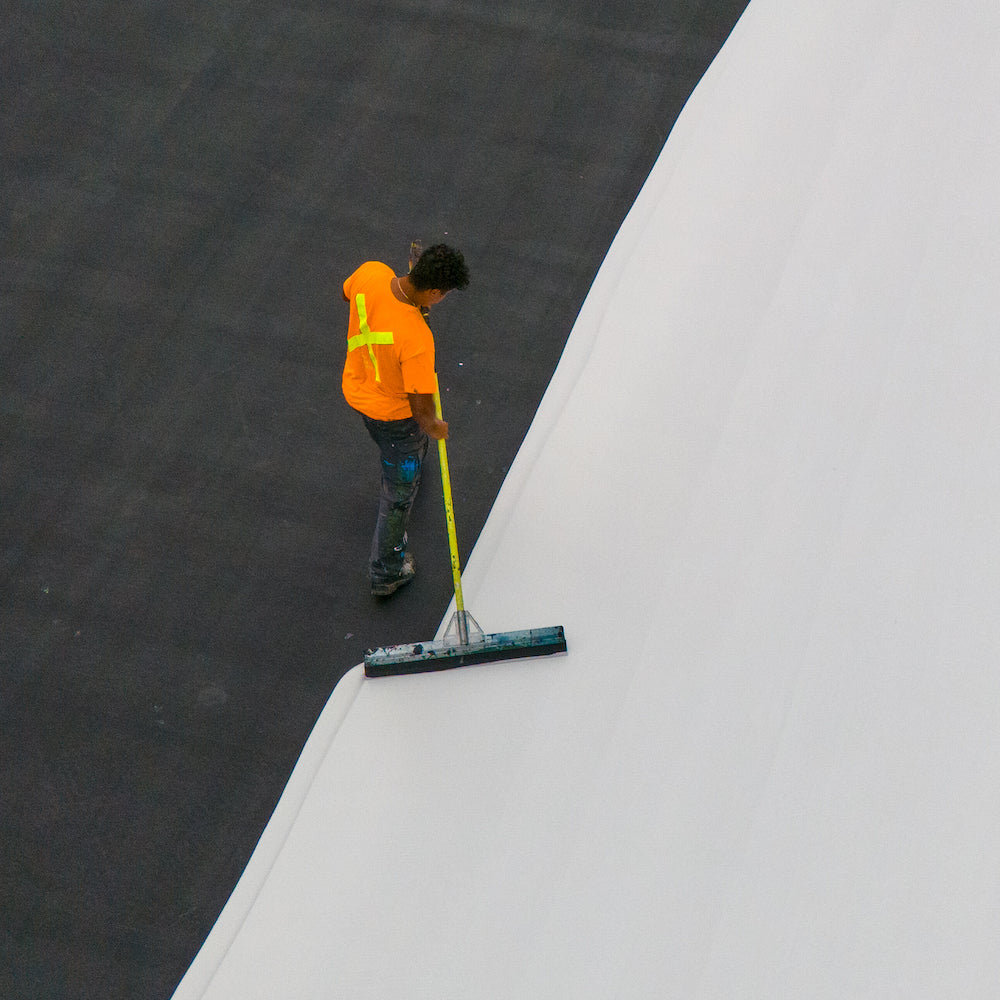
Instead of squeegeeing straight to the edge of the court and lifting off, the pull-off technique extends a section of poly sheeting or builder board just past your finishing point. Rather than stopping cold at the pavement's edge, you continue pulling your material onto that sheeting, giving excess coating somewhere to go besides the court surface itself.
It's a small setup step that makes a big difference in how clean your final edge looks.
Setting Up Before You Paint
The pull-off technique only works if it's planned for before you start painting, not improvised at the last minute:
-
Install poly sheeting or builder board at your finishing point before beginning your pass. This creates a designated area to pull excess material onto at the end, rather than leaving it on the court.
-
Position the sheeting so it fully covers the area beyond your last planned pass. If it's too short, excess material can still end up on the finished surface.
-
Pair it with a snap chalk line and masking tape around the rest of your work area, so the entire finished edge, not just the pull-off point, stays clean and consistent.

Executing the Pull-Off
Technique matters just as much here as it does anywhere else on the court:
-
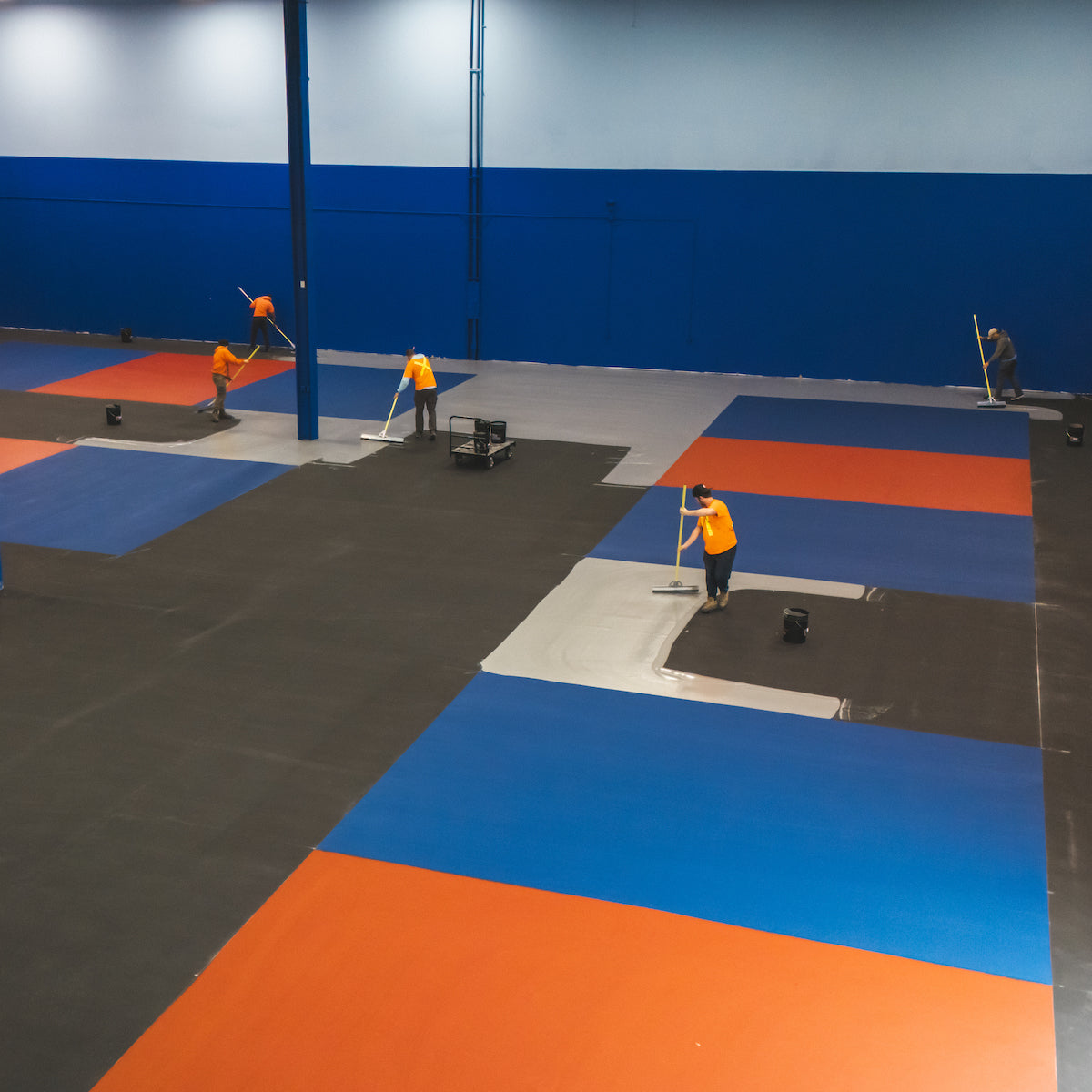
Maintain the same consistent passes all the way to the end. Avoid changing your pressure, angle, or speed as you approach the final area, since that's usually where inconsistencies become visible.
-
Continue pulling your material onto the protective sheeting with one complete pass from end to end. A single, deliberate pass creates a cleaner finish than several short, choppy ones.
-
Pull excess material fully onto the sheeting so it can be removed without leaving buildup, puddles, or heavy marks on the finished surface behind it.
Removing the Sheeting Cleanly
How you remove the sheeting matters just as much as how you set it up:
-
Carefully remove the protective sheeting once the pass is complete, to leave a clean transition at the end of the coated area.
-
Don't wait too long to pull it up. If material begins to set before the sheeting is removed, it can drag, lift, or leave an uneven edge right where you wanted the cleanest line.
Common Mistakes That Ruin a Clean Edge
A few small missteps are usually behind a messy finish line:
-
Changing pressure or squeegee angle right at the finish, instead of staying consistent through the last pass
-
Skipping the sheeting setup entirely and squeegeeing straight onto bare pavement
-
Waiting too long after the final pass to remove the sheeting
-
Not extending the sheeting far enough to catch all the excess material
Avoiding these is usually less about skill and more about planning the finish before you ever pick up the squeegee.
Final Thoughts
The pull-off technique is one of those details that's invisible when it's done right and very visible when it's skipped. A few minutes spent setting up poly sheeting or builder board at your finishing point is what separates a court with a crisp, professional edge from one with a visible buildup line where the painting stopped.
For a look at this technique in action, check out our full video walkthrough: How to Paint Acrylic Color Coats.
DIY Court USA supplies Laykold Colorcoat, Acrylic Resurfacer, and Base Prep systems, along with the tools and resources to help homeowners, contractors, schools, parks, and recreation facilities apply a professional-quality, clean finish themselves.

Frequently Asked Questions
What is a pull-off used for when painting a court? A pull-off gives excess coating material somewhere to go at the end of a pass, preventing buildup, puddles, or drag marks at the finished edge of the court.
What kind of sheeting should I use for a pull-off? Poly sheeting or builder board both work well, as long as the sheeting fully covers the area beyond your last planned pass.
When should I remove the protective sheeting? You can remove it as soon as the final pass is complete. Waiting too long can let the material begin to set or potential accidents.
What happens if I don't use a pull-off technique? Without a designated area to pull excess material onto, it's much more likely to build up, pool, or leave heavy marks right at the finished edge of the court.
Can this technique be used for both resurfacer and color coat application? Yes. The same pull-off setup and technique applies whether you're closing out a pass of Acrylic Resurfacer or a final Color Coat layer.




Share:
How to Paint Acrylic Color Coats
Custom HEXPRO Sport Tile Courts: Your Court, Your Way