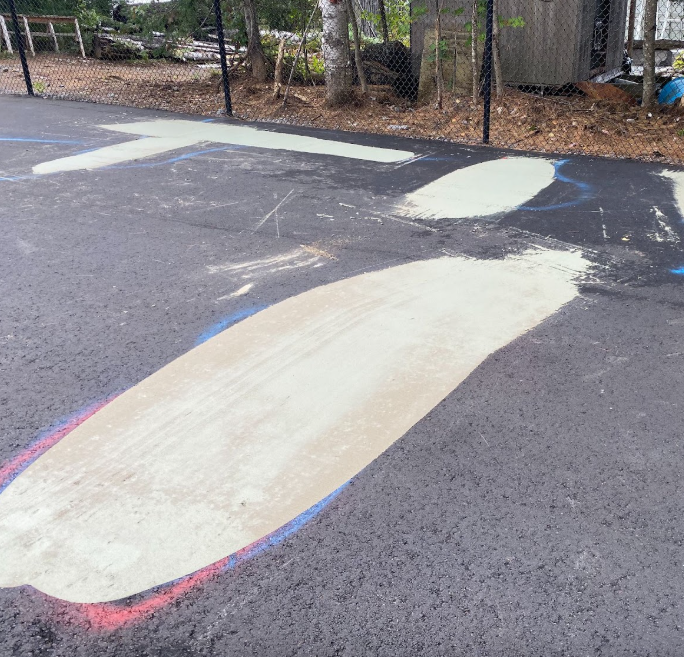
One of the most common problems on aging tennis courts, pickleball courts, and acrylic sport surfaces is the formation of puddles — often called birdbaths or low spots.
After rainfall, these low areas collect water instead of draining properly, creating:
- Extended lengths of unused playing time
- Slippery playing conditions
- Surface staining
- Faster surface deterioration
- Inconsistent ball bounce
Fortunately, many birdbaths can be repaired without rebuilding the court.
At DIY Court USA, we supply professional court repair materials including Laykold Court Patch Binder (CPB) and resurfacing products designed for acrylic sports courts.
In this guide, we’ll explain how to identify and repair puddles and low spots on a tennis court using proven court patching methods.
What Is a Birdbath on a Tennis Court?
A birdbath is a low area in the court surface where water collects after rain.
These depressions are usually caused by:
- Asphalt settlement
- Surface wear over time
- Improper original grading
- Freeze-thaw movement
- Heavy usage and aging
Even small low spots can create noticeable puddles that impact playability and long-term court performance.
How to Identify a Low Spot or Birdbath
The easiest way to identify a birdbath is after rainfall.
Signs of a Low Spot
- Water remains on the court after surrounding areas dry
- Visible puddles or dark wet spots
- Uneven ball bounce
- Surface discoloration around the area
Using a Straight Edge to Locate Low Areas
One of the best professional methods for identifying birdbaths is using a long aluminum straight edge on the area showing signs of water.
How It Works
- Place the straight edge across the suspected low area
- Look for gaps underneath the straight edge
- Measure the depth of the depression
- Mark the perimeter of the low spot with chalk
This process helps determine:
- How large the birdbath is
- How deep the repair needs to be
- Whether multiple patching layers are required
Professional court contractors often use this method before resurfacing a tennis court.
Materials Used to Repair Tennis Court Birdbaths
Repairing low spots properly requires specialized acrylic court patch materials.
1. Laykold Court Patch Binder (CPB)
Laykold Court Patch Binder (CPB) is commonly used to create patch mixes for acrylic court repairs.
It acts as the bonding agent within the patch material and helps create a durable, smooth repair area.
2. Portland Cement
Portland cement is essentially the glue to improve hardness activate the patch mix. It helps strengthen the repair and improve long-term performance with the other components.
3. Silica Sand
Silica sand provides body, strength, and texture to the patch mixture.
It helps create:
- Proper consistency
- Strength and texture for the acrylic coating
- Smooth feathering into surrounding court areas
The sand gradation is important for achieving professional repair results.
How Tennis Court Birdbath Repairs Work
The goal of a birdbath repair is to gradually fill and feather the low area until water drains properly from the surface.
Typical Repair Process
Step 1: Clean the Surface
The repair area should be:
- Free of dirt and debris
- Dry
- Structurally sound
Loose coatings or damaged areas should be removed before patching.
Step 2: Mark the Low Spot
Using a straight edge and chalk:
- Identify the perimeter
- Measure the depth
- Confirm drainage direction
Accurate mapping is critical for a smooth final result.
Step 3: Mix the Patch Material
A typical birdbath patch mix may include:
- Laykold Court Patch Binder (CPB)
- Portland Cement
- Silica Sand
The exact ratios may vary depending on:
- Depth of repair
- Weather conditions
- Surface texture requirements
The mixture should be smooth and workable without becoming overly thin.
Step 4: Apply the Patch
The patch material is spread across the low area using:
- Metal straight edge to bridge the high and low points
The repair is feathered outward to blend smoothly into the existing court surface.
Multiple layers may be required for deeper birdbaths.
Step 5: Allow Proper Drying Time
Each patch layer should fully cure before:
- Additional patching
- Acrylic resurfacing
- Color coatings
Proper drying helps prevent delamination and promotes adhesion.
Step 6: Final Prep Before Acrylic Coating
Each patch layer should be carefully prepared before aplpying the acrylic coating
- Floor sander
- Rubbing stone
Proper preparation creates a smooth surface for the acrylic coating and playability.
Why Proper Birdbath Repairs Matter
Ignoring puddles and low spots can lead to larger surface problems over time.
Benefits of Proper Court Patching
- Improved drainage
- Better ball bounce
- Safer playing conditions
- Longer court lifespan
- Better resurfacing results
- Improved court appearance
Professional birdbath repair is often one of the most important steps before resurfacing a tennis court.
Can Birdbaths Be Fixed Without Rebuilding the Court?
In many cases — yes.
If the asphalt base remains structurally sound, low spots can often be corrected using acrylic patch systems without full court reconstruction.
However, severe structural movement or widespread base failure may require larger repairs.
Common Areas Where Birdbaths Form
Low spots commonly appear:
- Behind baselines
- Near net posts
- Along crack areas
- In older asphalt sections
- Around previous repairs
Regular court inspections help identify these issues early before they worsen.
Why Contractors Use Professional Court Patch Systems
Court patching is different from standard concrete or asphalt repair.
Professional acrylic court patch systems are specifically designed for:
- Tennis courts
- Pickleball courts
- Basketball courts
- Acrylic recreation surfaces
Products like Laykold Court Patch Binder (CPB) are engineered to bond properly with acrylic sports surfaces while maintaining consistent playability.
Final Thoughts
Puddles, birdbaths, and low spots are common problems on aging tennis courts — but they can often be repaired successfully using proper court patching methods and professional materials.
By using:
- Laykold Court Patch Binder (CPB)
- Portland Cement
- Silica Sand
- Straight edge leveling techniques
court owners and contractors can restore smoother, safer, and more playable surfaces.
At DIY Court USA, we proudly supply professional acrylic court repair and resurfacing materials for tennis courts, pickleball courts, basketball courts, and multi-sport facilities across the United States.

Share:
Best Basketball Hoops for Home Courts, Driveways & Recreation Spaces
Why the City Hoops Traveler Basketball Hoop Is One of the Best Portable Hoops on the Market